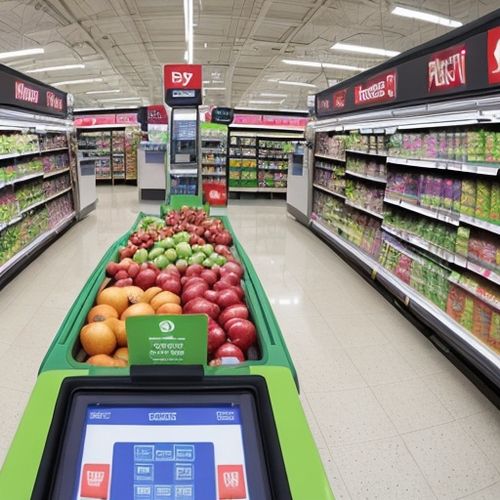
Australian supermarkets have been at the forefront of retail innovation, particularly when it comes to self-checkout systems. These systems, designed to streamline the shopping experience, have become a staple in major chains like Woolworths and Coles. However, one persistent issue has been accidental touches or mis-scans, which can frustrate both customers and staff. In response, retailers have been rolling out subtle but effective design changes to minimize these errors.
The problem of accidental touches isn’t just a minor inconvenience. For shoppers, it can mean delays as they wait for staff assistance to correct an error. For supermarkets, it can lead to lost revenue or even unintentional theft if items aren’t scanned properly. The challenge lies in creating an interface that’s intuitive enough for first-time users while preventing mistakes that disrupt the flow.
One of the most noticeable changes in recent years has been the introduction of delayed response buttons. Instead of registering a touch immediately, the system now requires a slightly longer press or a more deliberate action. This small tweak has significantly reduced the number of accidental scans, particularly for elderly customers or those unfamiliar with touchscreen technology.
Another innovation has been the repositioning of high-frequency buttons. Options like "skip bagging" or "I brought my own bag" were previously placed where customers might brush against them unintentionally. Supermarkets have since moved these buttons to less prominent areas of the screen or added confirmation prompts to ensure they’re only activated intentionally.
The physical design of self-checkout stations has evolved as well. Raised bezels around the screen help prevent stray touches from sleeves or shopping bags, while improved palm rejection technology ensures the system ignores incidental contact. Some stores have even experimented with foot pedals for certain functions, keeping hands free and reducing screen interactions.
Behind the scenes, supermarkets are using advanced analytics to identify pain points in the self-checkout process. By tracking where and when errors most commonly occur, they can make targeted adjustments to the user interface. This data-driven approach has led to subtle but impactful changes, like enlarging certain buttons or adjusting the timing between steps in the checkout process.
Staff training has adapted to these technological changes as well. Employees monitoring self-checkout areas are now better equipped to anticipate and quickly resolve issues before they escalate. Many stores have implemented discreet alert systems that notify staff when a customer appears to be struggling, allowing for timely but unobtrusive assistance.
These improvements reflect a broader shift in how retailers view self-checkout systems. No longer just a way to reduce labor costs, they’re now seen as an extension of customer service. The focus has moved from simply automating the process to creating an experience that’s both efficient and frustration-free. As these systems continue to evolve, we can expect even more sophisticated solutions to emerge, further refining the balance between speed and accuracy.
The response from customers has been largely positive, with many appreciating the more forgiving interface. While some shoppers initially resisted self-checkout altogether, these usability improvements have helped win over skeptics. Of course, there’s still room for enhancement, particularly in making the systems more accessible to people with disabilities or those less comfortable with technology.
Looking ahead, Australian supermarkets are exploring even more advanced solutions. Some are testing AI-powered cameras that can detect when an item hasn’t been scanned properly, prompting the system to offer gentle reminders. Others are experimenting with entirely touchless interfaces that respond to gestures or voice commands. These innovations promise to further reduce errors while making the checkout process even more intuitive.
What’s clear is that the era of frustrating self-checkout experiences may be coming to an end. Through careful design and continuous refinement, Australian retailers are demonstrating how technology can serve customers better when human factors are given proper consideration. The lessons learned here will likely influence retail technology worldwide as other markets face similar challenges with self-service systems.
By Jessica Lee/Apr 14, 2025

By Michael Brown/Apr 14, 2025
By Michael Brown/Apr 14, 2025
By Emma Thompson/Apr 14, 2025
By Elizabeth Taylor/Apr 14, 2025

By Eric Ward/Apr 14, 2025
By Amanda Phillips/Apr 14, 2025

By Sarah Davis/Apr 14, 2025

By Emily Johnson/Apr 14, 2025
By Noah Bell/Apr 14, 2025
By Natalie Campbell/Apr 14, 2025
By Emma Thompson/Apr 14, 2025

By Sophia Lewis/Apr 14, 2025
By Natalie Campbell/Apr 14, 2025
By Samuel Cooper/Apr 14, 2025

By Thomas Roberts/Apr 14, 2025

By Benjamin Evans/Apr 14, 2025

By Eric Ward/Apr 14, 2025

By Olivia Reed/Apr 14, 2025

By Jessica Lee/Apr 14, 2025