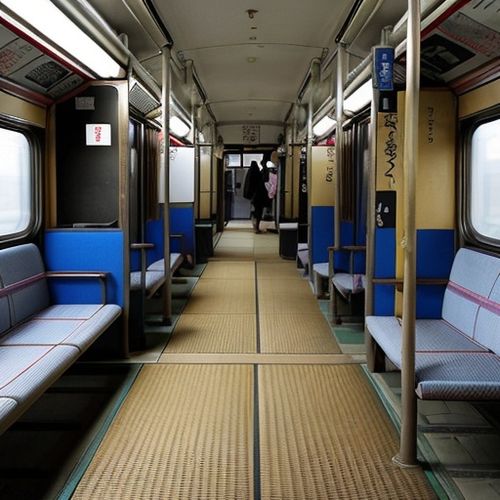
The concept of silence is deeply embedded in Japanese culture, and nowhere is this more evident than in the country's famous "quiet carriages" on trains and subways. These designated areas, marked by subtle signage and understood through unspoken social contracts, offer commuters a respite from the usual noise of public transport. The rules governing these spaces aren't merely suggestions—they're a reflection of Japan's intricate web of social etiquette that prioritizes collective comfort over individual expression.
Entering a quiet carriage in Tokyo during rush hour feels like stepping into a different dimension. While adjacent cars buzz with low conversations and the occasional ringing phone, these spaces maintain an almost reverential hush. Passengers instinctively lower their voices to whispers, if they speak at all. Phone calls are strictly forbidden, and even the sound of typing on a smartphone keyboard seems amplified in the stillness. This cultural phenomenon didn't emerge overnight but evolved from Japan's longstanding values of mutual respect and awareness of others—principles known as meiwaku (avoiding causing trouble) and omotenashi (selfless hospitality).
The implementation of quiet carriages varies across Japan's extensive rail networks. On some lines, entire trains operate under silent rules during specific hours, while others designate only certain cars. JR East's Shonan-Shinjuku Line and Tokaido Line were among the early adopters, introducing the concept in the 1990s to accommodate exhausted salarymen and students. What's remarkable isn't just the existence of these spaces but the near-universal compliance from passengers. Enforcement rarely requires staff intervention; peer pressure and social expectation maintain order more effectively than any written regulation could.
Foreign visitors often marvel at how seamlessly the system functions. A subtle glance from another passenger usually suffices to remind someone who forgets to silence their device. The occasional offender—perhaps a tourist unaware of the rules or a local having an emergency—typically receives not angry glares but patient, understanding looks. This tolerance for rare mistakes while maintaining strict standards reflects the nuanced balance Japanese society strikes between rules and humanity. The quiet carriage becomes a microcosm of larger cultural values where individual needs yield to communal harmony.
Technology plays an intriguing role in maintaining these silent spaces. Many Japanese smartphones automatically enter "manners mode" when detecting train movement, disabling notification sounds without user input. Noise-cancelling headphones have become ubiquitous, allowing passengers to enjoy audio content without leakage. Some rail companies have experimented with advanced soundproofing materials in quiet carriages, though the most effective soundproofing remains cultural rather than physical—the shared understanding that in this space, silence is golden.
The psychological impact of these quiet zones shouldn't be underestimated. In a nation known for long work hours and high-stress urban environments, the train ride becomes a rare opportunity for mental decompression. Salarymen briefly escape the demands of the office, students find respite between cram schools, and parents enjoy momentary peace away from household responsibilities. This daily meditation in motion contributes to Japan's remarkably low incidence of public transport altercations despite some of the world's most crowded commuting conditions.
Interestingly, the quiet carriage concept has begun influencing other aspects of Japanese transit etiquette. Some buses now feature silent seating areas, and certain highway rest stops designate "no phone call" zones. The principle has even extended beyond transportation—libraries, cafes, and co-working spaces increasingly adopt similar quiet policies, creating oases of calm in Japan's bustling cities. This cultural export demonstrates how transit innovations can reshape broader social norms when aligned with deeply held values.
As urbanization increases globally and public transport systems strain under growing passenger loads, Japan's quiet carriages offer a compelling model. They prove that civility and personal space needn't disappear in crowded conditions—that with shared understanding and mutual respect, communities can create pockets of tranquility amid chaos. The silent success of these spaces speaks volumes about the power of unspoken rules and the Japanese art of harmonious coexistence.
By Jessica Lee/Apr 14, 2025

By Michael Brown/Apr 14, 2025
By Michael Brown/Apr 14, 2025
By Emma Thompson/Apr 14, 2025

By Elizabeth Taylor/Apr 14, 2025
By Eric Ward/Apr 14, 2025
By Amanda Phillips/Apr 14, 2025

By Sarah Davis/Apr 14, 2025

By Emily Johnson/Apr 14, 2025

By Noah Bell/Apr 14, 2025
By Natalie Campbell/Apr 14, 2025

By Emma Thompson/Apr 14, 2025
By Sophia Lewis/Apr 14, 2025

By Natalie Campbell/Apr 14, 2025
By Samuel Cooper/Apr 14, 2025

By Thomas Roberts/Apr 14, 2025

By Benjamin Evans/Apr 14, 2025

By Eric Ward/Apr 14, 2025
By Olivia Reed/Apr 14, 2025
By Jessica Lee/Apr 14, 2025