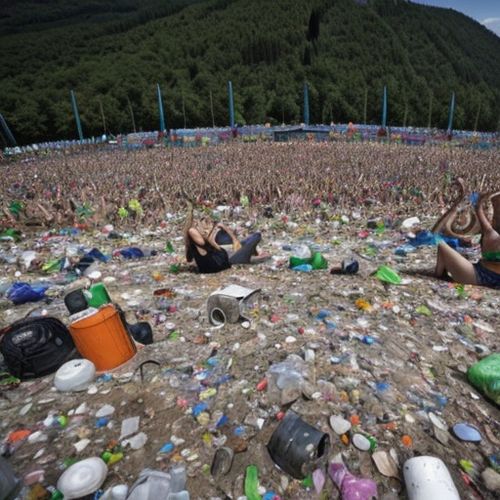
The vibrant energy of Europe's summer music festivals masks an inconvenient truth – mountains of waste left behind by revelers. New data reveals that European music festivals recycle just 35% of their waste on average, a startlingly low figure compared to leading events in other continents. Behind the pulsating beats and carefree dancing lies an environmental reckoning the industry can no longer ignore.
Festival organizers point to a perfect storm of challenges. The transient nature of events, combined with intoxicated attendees and contaminated waste streams, creates logistical nightmares. "You can have the best recycling infrastructure in place, but when thousands of people are mixing food waste with plastic cups at 3am, recovery becomes extremely difficult," explains Lars Björkman, sustainability coordinator for Sweden's Way Out West festival.
Cultural differences across Europe further complicate matters. Northern countries like Germany and Denmark achieve 50-60% recycling through rigorous sorting systems and bottle deposit schemes. Meanwhile, southern and eastern European festivals often struggle to reach 20%, lacking both infrastructure and attendee participation. This north-south divide highlights how fragmented policies undermine continent-wide progress.
The environmental impact extends beyond landfill statistics. Most festival waste consists of single-use plastics and food containers that could be recycled or composted. When improperly disposed, these materials release methane as they decompose and contribute to microplastic pollution. The carbon footprint of manufacturing all these disposable items only to bury them after brief use represents staggering inefficiency.
Some pioneering festivals demonstrate what's possible. Denmark's Roskilde Festival now recycles 67% of waste through a combination of clear bin labeling, volunteer "eco-teams," and financial incentives for proper disposal. Their "cup deposit" system alone has prevented millions of plastic cups from becoming litter. Similarly, the UK's Glastonbury has reduced waste to landfill by 50% since 2014 through comprehensive recycling stations and banning single-use plastic bottles.
Industry experts identify three key barriers to improvement: cost, coordination, and consumer behavior. Waste management can comprise up to 15% of a festival's operational budget, creating resistance to additional recycling investments. Without standardized waste contracts across different host cities, each event must reinvent solutions. Most crucially, changing attendee behavior remains the holy grail – as long as people treat festivals as consequence-free zones, progress will stall.
Potential solutions are emerging. RFID-chipped reusable cups allow festivals to track and wash containers rather than discard them. Digital platforms like Green Events guide organizers through waste reduction strategies. Some cities now require sustainability plans as part of permitting processes. However, without binding EU-wide regulations or financial incentives, adoption remains piecemeal.
The stakes extend beyond festivals themselves. As temporary micro-cities hosting hundreds of thousands, these events serve as testbeds for urban waste management innovations. What works at a three-day concert could inform permanent city systems. Conversely, failure to improve risks making festivals targets for environmental activists and regulation.
With climate consciousness growing among young festival-goers, the industry faces pressure to align with their values. The disconnect between eco-friendly attitudes and backstage waste practices threatens festivals' social license to operate. As Björkman warns, "We're selling an experience of freedom, but freedom shouldn't mean freedom from responsibility."
Europe's festival season has become a paradoxical spectacle – joyful celebrations of music and community that leave behind environmental scars. The 35% recycling average represents both a crisis and opportunity. In an era demanding circular economies, the events industry must harmonize its environmental performance with its cultural influence. The next act in this story will determine whether festivals become leaders or laggards in Europe's green transition.
By Emily Johnson/Apr 14, 2025

By Laura Wilson/Apr 14, 2025
By Sophia Lewis/Apr 14, 2025

By Olivia Reed/Apr 14, 2025

By Amanda Phillips/Apr 14, 2025

By Victoria Gonzalez/Apr 14, 2025

By Samuel Cooper/Apr 14, 2025
By Thomas Roberts/Apr 14, 2025
By Jessica Lee/Apr 14, 2025

By Noah Bell/Apr 14, 2025

By Ryan Martin/Apr 14, 2025

By John Smith/Apr 14, 2025

By Lily Simpson/Apr 14, 2025
By William Miller/Apr 14, 2025

By Eric Ward/Apr 14, 2025

By Megan Clark/Apr 14, 2025

By Ryan Martin/Apr 14, 2025

By Noah Bell/Apr 14, 2025

By Lily Simpson/Apr 14, 2025
By Sarah Davis/Apr 14, 2025