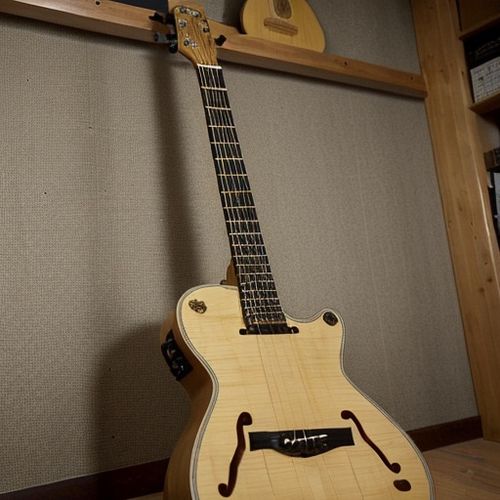
In the world of guitar craftsmanship, the search for sustainable yet tone-rich materials has led luthiers to explore unconventional alternatives. One such innovation gaining attention is the use of bamboo as a substitute for traditional rosewood in guitar fingerboards. This shift isn't merely about environmental consciousness; it's a serious acoustic experiment that challenges long-held beliefs about tonewoods.
The guitar community has long considered rosewood the gold standard for fingerboard material due to its density, oily texture, and warm tonal characteristics. However, with increasing restrictions on rosewood trade under CITES regulations and growing environmental concerns, manufacturers are compelled to seek viable alternatives. Bamboo, with its rapid growth cycle and surprising structural properties, has emerged as a contender that might reshape how we think about fretboard materials.
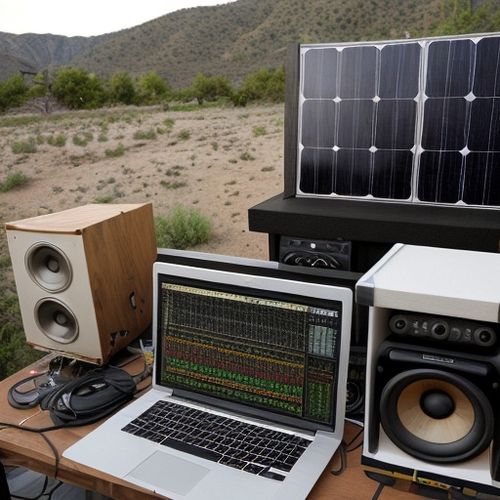
Acoustic testing reveals fascinating insights into how bamboo performs compared to traditional rosewood. When struck or plucked, bamboo demonstrates a brighter attack with pronounced midrange frequencies, while maintaining satisfactory sustain. The material's natural silica content contributes to a unique harmonic response that some players describe as "glassy" or "piano-like" in quality. These characteristics make bamboo particularly suitable for certain playing styles where note definition is paramount.
Density tests show that properly treated bamboo can approach the structural integrity of rosewood, addressing initial concerns about durability. The longitudinal strength of bamboo fibers, when properly oriented during manufacturing, creates a surprisingly stable playing surface that withstands years of fret wear. Modern treatment processes have also solved early issues with moisture absorption, making bamboo fingerboards reliable in various climatic conditions.
Player feedback from professional guitarists who have tested bamboo fingerboards presents an interesting spectrum of opinions. Many appreciate the faster response and reduced finger noise compared to some traditional woods. The smoother texture of properly finished bamboo allows for effortless slides and technical playing. However, some purists note that bamboo lacks the subtle warmth and complexity that aged rosewood develops over decades, sparking debates about whether these differences constitute compromise or simply represent a different tonal palette.
From an environmental perspective, bamboo's advantages are undeniable. While tropical hardwoods take decades to mature, bamboo reaches harvestable maturity in 3-5 years, with some species growing up to 91 cm (36 inches) in a single day. This rapid renewability, combined with bamboo's ability to regenerate without replanting and its significant carbon sequestration capacity, makes it an environmentally superior choice without the ethical concerns associated with rare wood species.
The manufacturing process for bamboo fingerboards requires specialized techniques to overcome the material's unique challenges. Unlike rosewood which is typically cut into slabs, bamboo must be laminated under high pressure to create stable blanks suitable for fingerboards. This process actually enhances the material's consistency, eliminating the natural variations that sometimes affect traditional tonewoods. The resulting product offers uniform density across the entire playing surface, a quality that appeals to players seeking predictable performance.
Long-term testing is still underway to evaluate how bamboo fingerboards age compared to traditional materials. Preliminary observations suggest that bamboo maintains its structural stability exceptionally well, showing minimal wear even after extensive use. The material's resistance to temperature-induced expansion and contraction appears superior to many conventional woods, potentially offering better tuning stability over time. However, the question of whether bamboo will develop character with age like rosewood does remains unanswered.
Market reception to bamboo fingerboards has been cautiously optimistic. While some boutique builders have fully embraced the material, major manufacturers are taking a more measured approach, introducing bamboo options alongside traditional models. Price points for bamboo-fingerboard guitars are becoming increasingly competitive as processing techniques improve, making them accessible to a broader range of players. Educational campaigns are helping overcome initial skepticism by demonstrating the material's acoustic merits rather than just its environmental benefits.
Looking forward, bamboo's role in guitar construction may extend beyond fingerboards. Some innovators are experimenting with bamboo for guitar backs and sides, and even for solid-body electric guitar construction. The material's unique vibrational properties could lead to entirely new tonal possibilities that don't simply mimic traditional woods but create distinctive voices. As sustainability becomes increasingly important to musicians and manufacturers alike, bamboo appears poised to transform not just what guitars are made of, but how they sound.
The bamboo versus rosewood debate ultimately comes down to priorities. For players seeking the classic vintage tone and traditional aesthetics, rosewood will likely remain preferred. But for those open to new sounds and committed to sustainable choices, bamboo presents an exciting alternative that stands on its own merits rather than as just a substitute. As acoustic testing continues and manufacturing techniques refine, bamboo may well establish itself as a standard rather than alternative material in guitar making.

By Emily Johnson/Apr 14, 2025

By Laura Wilson/Apr 14, 2025
By Sophia Lewis/Apr 14, 2025

By Olivia Reed/Apr 14, 2025

By Amanda Phillips/Apr 14, 2025

By Victoria Gonzalez/Apr 14, 2025
By Samuel Cooper/Apr 14, 2025
By Thomas Roberts/Apr 14, 2025

By Jessica Lee/Apr 14, 2025

By Noah Bell/Apr 14, 2025

By Ryan Martin/Apr 14, 2025

By John Smith/Apr 14, 2025

By Lily Simpson/Apr 14, 2025

By William Miller/Apr 14, 2025

By Eric Ward/Apr 14, 2025

By Megan Clark/Apr 14, 2025
By Ryan Martin/Apr 14, 2025
By Noah Bell/Apr 14, 2025
By Lily Simpson/Apr 14, 2025

By Sarah Davis/Apr 14, 2025