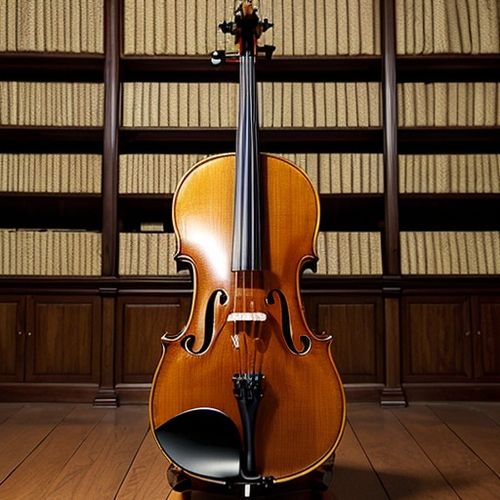
The global trade in rare tonewoods has long been the lifeblood of fine instrument making, but recent conservation measures have sent shockwaves through the world of cello craftsmanship. For generations, luthiers have relied on specific species like Brazilian rosewood and certain mahoganies to create instruments with unparalleled resonance. These woods, now protected under international agreements, are becoming increasingly difficult to source legally, forcing master craftsmen to reconsider centuries-old traditions.
In the workshops of Cremona, Italy - the spiritual home of string instrument making - artisans speak in hushed tones about the challenges they face. Marco Bellini, a fourth-generation cello maker, explains: "The wood we used to take for granted now requires paperwork that would make a bureaucrat weep. Each piece must come with documentation proving it was harvested before the bans, or from sustainable sources. Sometimes we wait months for a single shipment to clear customs." This bureaucratic nightmare has doubled the lead time for premium instruments, with waiting lists stretching into years rather than months.
The physics of sound production makes the situation particularly acute for cellos. Unlike smaller violins that can achieve brilliance with various woods, the cello's lower register demands specific density and cellular structure found in now-protected species. Dr. Elena Petrov, a materials scientist specializing in musical instruments at Vienna University, notes: "When you change the wood, you're not just altering the appearance - you're rewriting the entire acoustic signature. Modern alternatives like thermally modified maple or sustainable bamboo composites produce good instruments, but they don't recreate the complex overtones that define legendary 18th century cellos."
This crisis has sparked innovation in unexpected quarters. Some forward-thinking luthiers are experimenting with "sandwich" constructions, layering legal woods with thin veneers of prohibited materials for tonal purposes. Others are investigating ancient preservation techniques, reclaiming timber from demolished colonial-era buildings or sunken ships. Jean-Luc Moreau, a Paris-based restorer, recently made headlines by crafting a concert cello using 300-year-old oak from a dismantled Loire Valley chateau. "The wood sings with history," he remarked at the instrument's debut, though purists questioned whether such experiments honor or compromise tradition.
The financial implications are reshaping the industry's economics. Premium antique cellos - those made with now-illegal woods - have seen their values skyrocket, creating a new class of musical "blue chip" investments. Meanwhile, contemporary makers face impossible choices: use inferior materials and risk their reputations, or navigate the black market and risk prosecution. A recent INTERPOL operation uncovered a smuggling ring moving rosewood disguised as furniture components, revealing the lengths some will go to obtain these precious materials.
Conservationists argue these sacrifices are necessary to protect ecosystems, pointing to the devastation of Pernambuco populations in Brazil's Atlantic forest. Yet many musicians counter that a single cello uses relatively little wood compared to furniture or flooring industries. The debate grows more heated as orchestras report difficulties maintaining consistent sound across sections when newer instruments must blend with older ones. Maestro Rafael Gutierrez of the Berlin Philharmonic observes: "It's like asking a Stradivarius to duet with a synthesizer. The soul is different, even if the notes are the same."
Emerging technologies offer potential solutions, if not perfect ones. 3D printing with wood-infused polymers can replicate density patterns, while spectral analysis helps match new woods to vintage tonal profiles. Some startups are even experimenting with lab-grown wood cells cultured to mimic ancient growth patterns. Yet for all this innovation, many cellists still crave the irreproducible magic of instruments born from now-forbidden forests. As the last legal stocks dwindle, each new cello made with traditional materials becomes not just an instrument, but a time capsule of disappearing sonic history.
The human stories behind these changes often go unheard. Apprentices who trained for decades to work with specific woods now find their expertise obsolete. Small family workshops face extinction as material costs outpace what most musicians can pay. Even the simple act of selecting wood - once a spiritual ritual passed down through generations - has become a legal minefield. Perhaps the greatest loss is intangible: that mysterious alchemy when a tree's life transforms into an instrument's voice, a process now constrained by regulations designed to protect the very forests that made such transformation possible.
By Emily Johnson/Apr 14, 2025

By Laura Wilson/Apr 14, 2025

By Sophia Lewis/Apr 14, 2025

By Olivia Reed/Apr 14, 2025

By Amanda Phillips/Apr 14, 2025

By Victoria Gonzalez/Apr 14, 2025
By Samuel Cooper/Apr 14, 2025
By Thomas Roberts/Apr 14, 2025

By Jessica Lee/Apr 14, 2025
By Noah Bell/Apr 14, 2025

By Ryan Martin/Apr 14, 2025

By John Smith/Apr 14, 2025

By Lily Simpson/Apr 14, 2025

By William Miller/Apr 14, 2025

By Eric Ward/Apr 14, 2025
By Megan Clark/Apr 14, 2025
By Ryan Martin/Apr 14, 2025
By Noah Bell/Apr 14, 2025
By Lily Simpson/Apr 14, 2025

By Sarah Davis/Apr 14, 2025